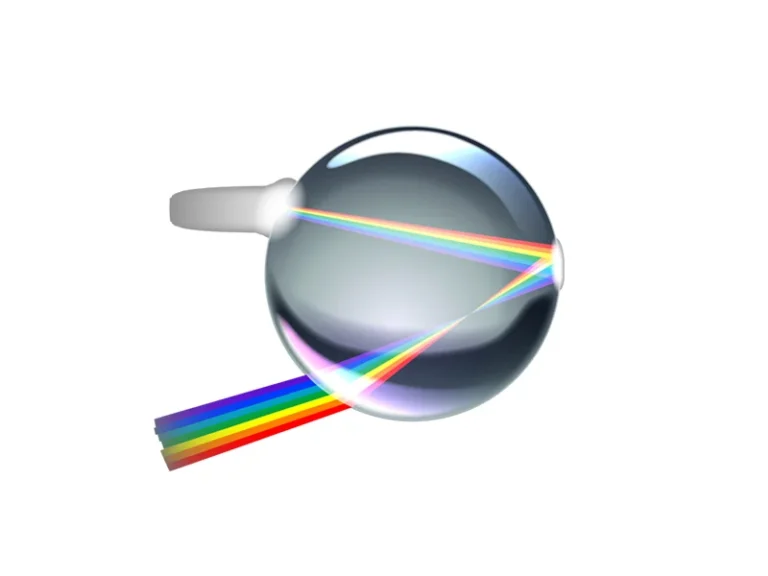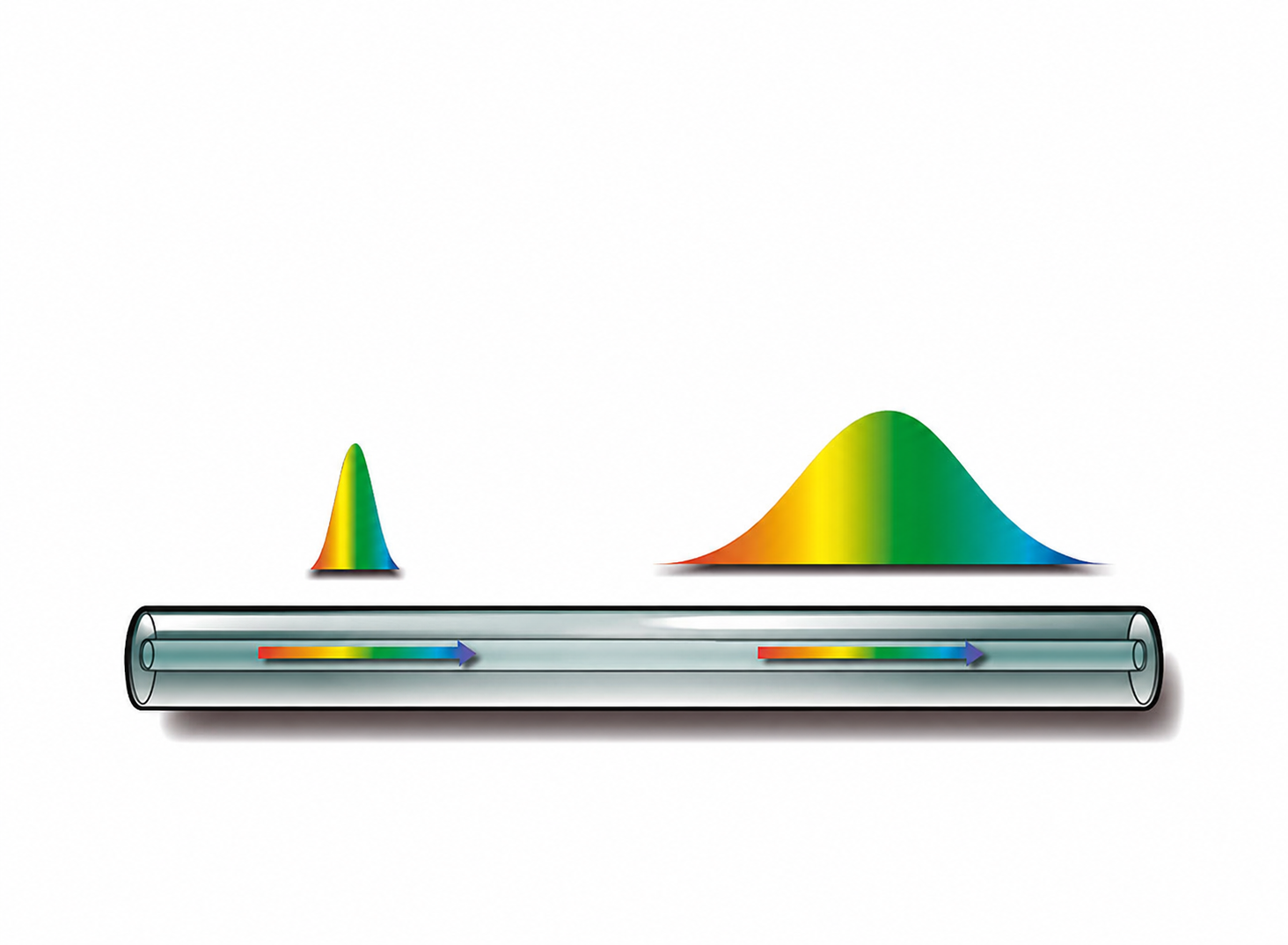
The rainbow is the most commonly observed example of dispersion. The scientific explanation is that the sunlight is first refracted entering the surface of the raindrop, reflected off the back of the drop, and again refracted as it leaves the drop, splitting the white light into a rainbow that is observable to the human eye.
This phenomenon that white light is separated in different colors to form a rainbow is named dispersion.