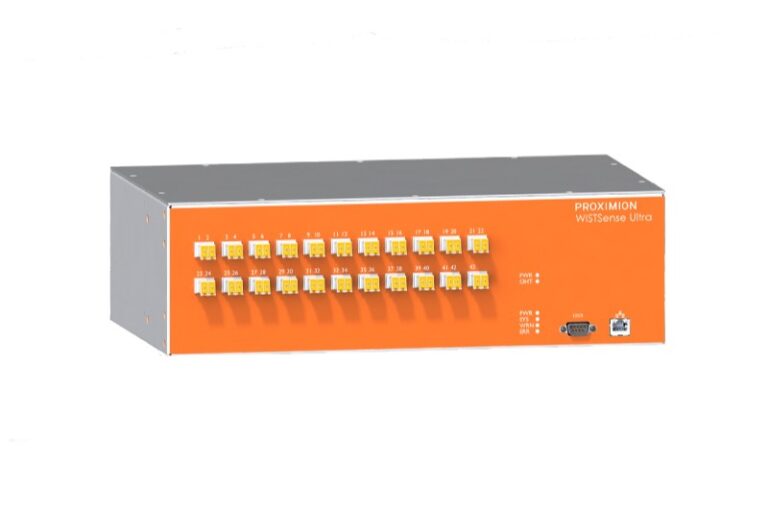
Temperature is a fundamental parameter in many systems—telecom equipment racks, chemical and industrial process plants, liquified gas cryogenic environments, and cryostat systems. Proximion’s fiber-optic temperature sensors are based on Fiber Bragg Gratings (FBG), providing immunity to electromagnetic interference (EMI), multipoint sensing and suitability for extreme or high-voltage environments.
Temperature Sensors
Fiber-optic Temperature Sensors
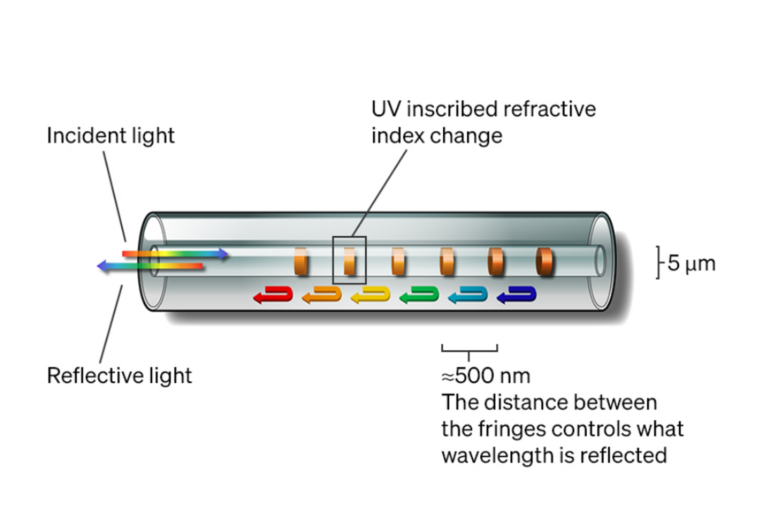
Operation Mechanism
As temperature changes, an FBG’s period and refractive index shift, moving the reflected Bragg wavelength. This shift is read using a high-resolution interrogator and converted into temperature.
By manufacturing a number of FBGs with different reflection wavelengths on the same fiber allow multipoint measurement. This considerably reduces the complexity and effort to install the cabling infrastructure compared to conventional techniques.
Key Capabilities
- Spatial multiplexing: dozens to hundreds of discrete sensors per fiber.
- High resolution and repeatability: sub-cm spatial and sub-degree temperature resolution.
- Long-term stability: negligible drift over years.
- Wide temperature range: from cryogenic (below 20 K) to several hundred °C.
- EMI immunity: unaffected by RF fields or high voltage.
- No complex cabling: simple, single fiber installation.
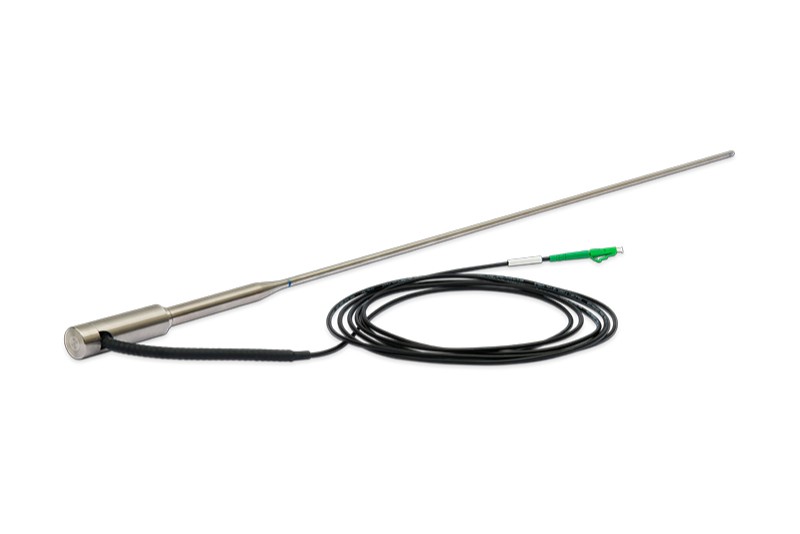

Use Cases
- Industrial process control (e.g. chemical reactors, steel casting furnaces).
- Monitoring critical temperature systems on aircraft.
- Cryogenic systems for liquid gas production and storage.
- Temperature profiling in liquid and gas refining.
- Monitoring electronics cabinets and telecommunication racks.
Proximion Advantage
Proximion has extensive experience in the deployment of FBG optical sensor systems in industrial and critical environments. Our key competence is to understand the application requirements to design, manufacture and deploy solutions specific to the customer’s need. Such solutions provide real-time, accurate data for smarter decision-making, improved safety, and optimized performance.
With proprietary calibration algorithms, temperature sensors from Proximion are pre-characterized and traceable. The interrogation systems are optimized for low noise and fast response, giving clear, reliable real-time readings over extended fiber runs. Their adaptability and reliability make them the preferred choice for modern sensing solutions for today’s demands to optimise efficiency, enhance sustainability and increase safety.